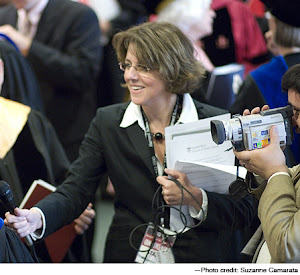
A barrier-breaking generation gives context to contemporary female life.
Friday, July 20, 2012
Guns Don't Make Citizens Safer
Do you really want the facts about gun ownership and gun violence, or do you prefer the NRA's false rhetoric? At Harvard School of Public Health, where I worked until recently, its Injury Control Research Center website tells the truth about the causes and consequences of our precious "right to bear arms" -- more like a "right to be killed by a gun."
Some examples: States with higher gun ownership rates have higher rates of gun homicide. Same holds true for countries. (the point -- guns don't make people safer) And guns in the home are more likely to be used to intimidate intimates than to fend off strangers. Meanwhile, young people who commit suicide by firearms almost always do it with a gun owned by a parent. How tragic is that? Completely preventable. Guns give no second chances. Of people who attempt suicide by gun, 85% are "successful". Compare this to attempted suicide by poison/pill overdose -- 2% success. And the vast majority of people who have a failed attempt at suicide will not eventually die by suicide. Instead they will go on with their lives and die sometime of other, different causes. But, as I said, no second chances for people with a gun in their hands.
The right to bear arms is bunk. Semi-automatic weapons too easily turn violent psychotic people into mass murderers. Think about if the guy at the movie theater last night in Aurora, a suburb of Denver, had only had a knife...
At this posting, 12 people were killed in the massacre and 59 were wounded.
Monday, July 2, 2012
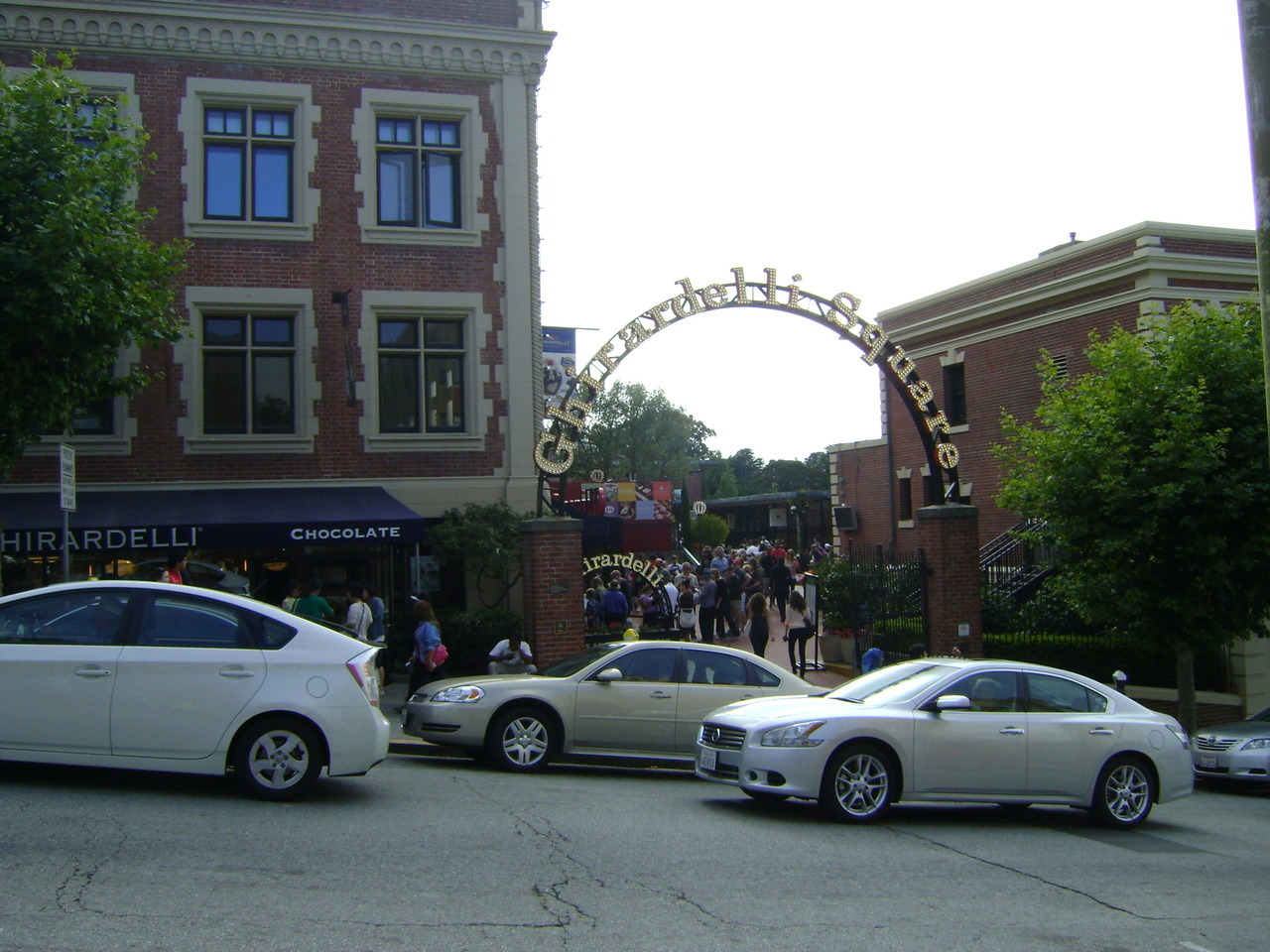
A Girl from Delhi in Ghirardelli Square
| courtesy: Chronicles of a Valley Girl |
As a "pioneer" in an earlier generation, I identify with my young friend from India. She is an engineering student at Princeton University, the first of her extended family to study abroad and a female at that! What a fuss the Aunties made at home, she told me, criticizing her parents for allowing her, an unmarried girl, to live and study beyond their reach and protection.
There are still many barriers to break, pioneering to be done by women globally. My friend recently felt her liberation, of personhood and thought, most keenly in SF's Ghirardelli Square. Her post is illuminating -- about her journey and ours.
Excerpt:
On the SF visit, my friends were kind of annoyed at my constant nagging to go to Ghirardelli Square to eat ice cream (though they did a good job of trying to hide it!). Still, visiting Ghirardelli for me was more than just tasting their wonderful desserts. The last time I visited Ghirardelli Square and stayed around for a while was in 2008 with family. 2008 was a different life. It was my first visit to the US and I was struck first and foremost by how self reliant people here seemed. Of course, I now know that it is more of a necessity. The US seems to force you to be self reliant, in a way in which I was never forced before. Growing up in Delhi, I was very protected and sheltered. Of course, a lot of it had to do with age and the level of safety a city like Delhi accorded me - but coming to the US, I felt it gave me the means to be completely free, make my own decisions, my own mistakes and really understand myself.
I mentioned this to my parents and others around me when we visited, and most people laughed it off. Like many other things I said on the trip, this too was considered a whim, a teenager’s fantasy and phase that I would soon grow out of.
“Things are different in the real world. Don’t try and be TOO independent. It’s not a good attitude, especially for girls…”
Full blog post at Chronicles of a Valley Girl
Sunday, July 1, 2012
The Swimmer and the Writer
Charming and uplifting first person story by NYT sportswriter Karen
Crouse on how she impacted a swimmer's life at age 13 through the power of
the written word. He went on to become an Olympic champion. She went on to become....NYT sportswriter Karen Crouse.
Friday, May 25, 2012
Etan Patz: The Boy New Yorkers Never Forgot
From my current memoir-in-progress:
There must have been something too,
about the child Etan Patz, or maybe about his plight. This was the six-year-old
boy who disappeared in lower Manhattan, it was 1979, while walking to the
school bus stop – on his own for the first time. He most certainly was
kidnapped; his photo was in all the papers and on posters all over the city for
weeks and months and then years. While I was working in New York at the Times,
I was often on the subway on my way to an assignment, and in the rocking motion
of the cars and this forced downtime, I would scan the faces of the people on
the other side of the car and daydream a bit, as everyone must. And sometimes I
would try to imagine if I would recognize Etan Patz, as an adolescent, as a
teenager. Would I be able to spot that particular upturned smile? Could I
recognize him and grab him and say, I know you; you are Etan Patz, you were
taken away by a bad person, but your mother is still looking for you. Do you
remember? And I’d pull him out of his bewilderment and restore him to his
mother. It bothered all of us New Yorkers terribly, that story.
Headline today:
Tuesday, May 22, 2012
"I Went to Princeton, Bitch" A Video For Smart Women Everywhere
Check out the hilarious video by Nikki (2k) Muller: "The Ivy League Hustle (I Went to Princeton, Bitch)"
A slogan for women everywhere who still feel like they have to somehow mask their smarts. If a man is intimidated, that's HIS problem.
Sunday, May 20, 2012
Women in Their Place
This New York Times editorial quickly captures all the ways in which the Republicans have shown they want women back in their place -- by undermining equal pay efforts, domestic violence protection and reproductive health services, including cancer screening. As far as I know, we still have the vote.
From the editorial: Whether this pattern of disturbing developments constitutes a war on women is a political argument. That women’s rights and health are casualties of Republican policy is indisputable.
Wednesday, March 28, 2012
How About a Green Jacket for the Lady Who Runs IBM?
Augusta, consider yourself screwed. It's over. IBM's Chief Executive is a woman. Never figured on that, did you? I expect Virginia M. Rometty will not go away quietly if you fail to give her a green member's jacket like you do all the other major sponsors' execs. NYTimes' Lynn Zinser explains.
Tuesday, March 27, 2012
Madeleine Albright: Rights Never Stay Won
In her latest support email for Obama, former Sec. of State Madeleine Albright wrote:
Republicans are on the wrong side of history, once again.
Women will never go back to the days where we could not control our own reproductive health care decisions – and we will not remain silent in the face of vicious misogyny and anti-women hate speech.
But, one thing I’ve learned is that rights never stay won. Each generation must stand up and fight to hold accountable those who would try to take our rights away.
Women will never go back to the days where we could not control our own reproductive health care decisions – and we will not remain silent in the face of vicious misogyny and anti-women hate speech.
But, one thing I’ve learned is that rights never stay won. Each generation must stand up and fight to hold accountable those who would try to take our rights away.
Monday, March 26, 2012
Rugby & Equity: How I Became a Sportswriter
[reposted from 2004]
It’s probably rare that a person can pinpoint the moment that set their life’s work on its unique course, but I happen to know that moment, can still feel it; the heat coming to my face, the turn of my head, the pivoting of my feet and all that was contained in that completely reflexive move. Here’s the setup to that moment:
I had joined the college newspaper my freshman year at Princeton.
I was the only girl on the newspaper staff, the university having just
hastily admitted its first female students in the fall of 1969. But Princeton
could hardly be called co-ed yet. There were only 100 girls that first
year; the male/female ratio was 20 to 1, and the august Gothic campus
was still very much “the Old Princeton,” though change was coming.
I
had worked on my high school newspaper, my junior high newspaper, had
started an elementary school newspaper with my classmates and, to go
even farther back, had published a neighborhood news sheet using a
little printing press with rubber letters that my parents had given me
in maybe fourth grade. I was, in short, a newspaper person.
So
I was very pleased to have “made staff” at The Daily Princetonian, and
that day, went to the bulletin board in the “Prince” office to see what
assignments I’d been given for that semester’s coverage.
As
I understood it, each reporter was to receive a “news” assignment and a
“sports” assignment because at this Ivy League college there were so
very many sports teams that all hands were needed to report on them.
Across
from my name on the bulletin board under the “news” category it said I
was to cover the faculty; a prestigious assignment. But under “sports”
the column was blank. Mark had baseball, Tom had football and so on, but
under my name…nothing.
Pivoting
reflexively from the bulletin board, I took a few steps toward the desk
of the sports editor and set the course of my career.
I
can still see him, bare feet up on his desk, worn jeans, a halo of
unruly blond hair and a stoned expression on his face (he spent a lot of
afternoons like that).
“Why didn’t you give me a sports assignment?” I demanded across the desk.
He looked at me languidly. “Well, we didn’t think you’d want to cover one.”
“Why
should I do HALF the work of everybody else?” I said with unassailable
logic and probably some degree of force because I remember he kind of
sat up in his chair and stammered out a reply: “Well, I never thought of
it that way.” Then he made an offering: “What sport do you wanna
cover?”
Now
here was the crunch. Understand that I was no great sports enthusiast
and had never played a sport in school; I had a passing knowledge of
professional sports from sharing lazy Sunday afternoons on the couch in
front of the TV with my dad watching football games, golf tournaments
and the like. I certainly knew who Joe Namath was and Y.A.Tittle and
Arnold Palmer, so maybe I was ahead of the game. But now I had to think
quickly, and an image came to mind.
How about rugby? I ventured.
Rugby? The zoned-out sports editor was incredulous. Rugby
was a brutish club sport played by reckless young men of high
disrepute. But what the editor didn’t know was that I’d already been to
several rugby team parties, and they were predictably wild and loads of
fun. The bawdy drinking songs were especially transgressive for a girl
from a protected suburban upbringing.
So
rugby it was. I wrote about the team that fall, then the (men’s) squash
team in the winter and (men’s) tennis in the spring, football the next
fall. Then I lost the election for managing editor of the newspaper, but
the new editor appointed me sports editor. Now with sports writing
unexpectedly on my resume, when I graduated I ended up with a summer
intern’s job in the sports section of The New York Times and that was
that.
I’d never intended to be a sports writer; as I tell everyone now, it was a pure and simple matter of equity…and rugby parties.
Breaking the Locker Room Barrier
(reposting this from a 2004 blog entry)
Here’s what happened instead:
“Dear
Miss Herman – It’s hard to address a harlot disguised as a reporter,
but I just want to warn you that you cannot do such a thing with
impunity. It’s wrong, no matter how many women libbers might dumbly
applaud.
“If
there had been any real, real men in that locker room you would have
been kicked out on your prostitutional ass. May that happen, if there is
anything to wake you up to your horrendously bad example. Surely you
shall regret this, and regret it bitterly.”
It was an anonymous letter with a Georgia postmark that arrived in the tide of letters to my desk at The New York Times following “the Montreal locker room incident” of Jan. 21, 1975.
That night, following the National Hockey League’s All-Star game, I had
joined the other sports reporters at the door to the winning team’s
locker room, and, like everyone else, I had walked in.
At
first, I thought no one would notice me (really) in the crush of
reporters eager for a quick post-game quote to round out their stories. I
was wearing dark slacks and a dark sweater; I didn’t stand out, I
thought…..but there was a rumble and then a kind of shriek and shout.
What they saw apparently astonished them: a girl in the locker room!
There
were TV lights and photographers and reporters with microphones
crushing in on me – and on Marcel St. Cyr, a female reporter for CKLM
radio in Montreal who had walked in right behind me — but I quickly lost
sight of her. I tried to continue my interview with one of the hockey
players…he was wearing a towel around his waist, and he held another
towel to his curly hair, still wet from the showers, but I could hardly
hear his words for the din and for the rush of my own blood in my head.
“Why are you here?” the male reporters asked. “What are you doing?”
I
tried to push them away. I’m not the news; “I’M JUST DOING MY JOB,” I
kept saying, to no avail, for I was, that night, big news indeed.
Why was I there? A much longer story (see “Rugby and Equity” under category Sports) Why was I there that night…a shorter story.
I was but 23 years old. As the regular beat reporter covering professional hockey for The New York Times,
it was my job to write up games about the New York Rangers and New York
Islanders. And get the stories done in time to make the morning
newspaper’s severe deadline of 11 p.m. The games were typically finished at 10:25 p.m.
![]() |
| Robin and Bruins' Terry O'Reilly |
It
was a literal sprint down to the locker room level to get a post-game
quote from the players, something every game story would have the next
day, and then back up to the press room to churn out the article. I
DIDN’T HAVE TIME TO WASTE. Being barred from the players’ locker room,
forced to wait at the door for a player to come out, was wasting time I
simply didn’t have—and I personally found it mortifying. I had been
lobbying the NHL to allow me into its clubs’ locker rooms as a matter of
equity and professionalism— at the time I was the only female member of
the National Hockey Writers Association.
But
the answer, in cool patrician language from Clarence Campbell, the
president of the league, had always been ‘no’. And from certain club
presidents and general managers it had been less polite and more like
‘hell no’.
Then
came the All-Star game. Change was in the air in all parts of society,
and the locker room issue, as absurd a privilege as it seems, was
assuming symbolic proportions.
I
didn’t ask for the big event to happen that night. The invitation came
entirely unsolicited. At a press conference the day before the game, a
waggish reporter from Boston,
without my prompting or foreknowledge, asked the two All-Star team
coaches if they would admit accredited female reporters into the locker
room after the game as they routinely did the male reporters.
The
two coaches looked briefly at one another, one of them raised an
eyebrow, and then they both firmly said yes. And so the other reporters
prepared for a great story, and Marcel, and I were left to decide
whether we would take up the offer.
The
reason the coaches were able to say yes so easily, I realized in
retrospect, was because the teams they would be coaching that next night
were not really theirs. These were All-Star teams, an artificial
construct for whom no one in particular was responsible. The coaches
could go home to their own pro teams after the game, and no custom would
change. The locker room entry could be viewed as a one-night stand.
When
I saw the locker room invitation printed unequivocally and under
provocative headlines in the French papers the next day—turning a
longtime request to the league into a dare--I knew a time to act had
presented itself.
The
All-Star game, though contested by hockey’s icons, was a boring,
half-heartedly played 7-1 match. As Marcel and I walked down to the
locker rooms, along the boards and toward the ramp, a photographer
jumped in front of us and begged us to stop for a quick photo. I began
then to get a queasy feeling that something more than just a set of
ordinary player interviews was going to occur.
As
I walked into the damp locker room jammed with reporters, and the
perspiring, semi-clothed players on benches along the periphery, I still
really thought no one would notice me in the milling crowd.
The
next day’s papers argued otherwise. There were big headlines “Girl
Reporters Get the Bare Facts” “Locker Room Barrier Broken” in newspapers
across Canada and the United States. It didn’t matter if the city even had a hockey team.
For
weeks afterward, wherever I traveled on the road with the Rangers or
Islanders, male sports reporters from newspapers and TV followed me
around, asked questions about my job, argued in sports columns whether
women had the right to be in
the locker room. And I found myself forced to muster Supreme
Court-worthy arguments for an inane, essentially logistical problem that
could easily have been solved by a few big towels.
Eventually,
over the course of a year, through sheer force of my persuasion and
gathering momentum kicked off by the All-Star game, the other NHL teams,
one by one, allowed me into their locker rooms. It turned out not to be
the young players (all the same age as me) so much who’d been objecting
to the times a changin’. It was usually an owner or general manager or
coach from an older generation who simply couldn’t accept the idea of a
woman in this historically, culturally and very literally and nakedly
all-male territory. The reaction was instinctive and visceral. I
remember one silver-haired coach apologizing over and over, insisting
that he liked me, that he liked women. He couldn’t help but say no. I
don’t think he even understood why himself.
It
had much to do with sex roles and sexuality and power and all that— a
big cliché, but one with undeniable force--- the closed locker room as a
metaphor we were all living---but that barrier crumbled away, along
with a lot else, in the face of the Woodstock generation’s free-thinking
and righteous ways.
I
was a sportswriter for a quick five years; I moved on when it became
boring. How many times could I listen to players and coaches after the
game say “Our guys gave a hundred and ten percent” “We let them play their game, we didn’t play ours.” “The ball didn’t bounce our way” “We play it one game at a time”….it got so I could write the quotes myself.
Those
quotes…the ones that I pressed so hard to get into the locker room to
write down. They weren’t the point after all, were they?
----------------------------------------------------------------------------------------------------

Subscribe to:
Posts (Atom)